Security Scanning Provider
Automated Security Scanning Service
Catch vulnerabilities before they hit production. Automate continuous security checks across your pipeline to reduce risk, speed up remediation, and keep releases moving with confidence.

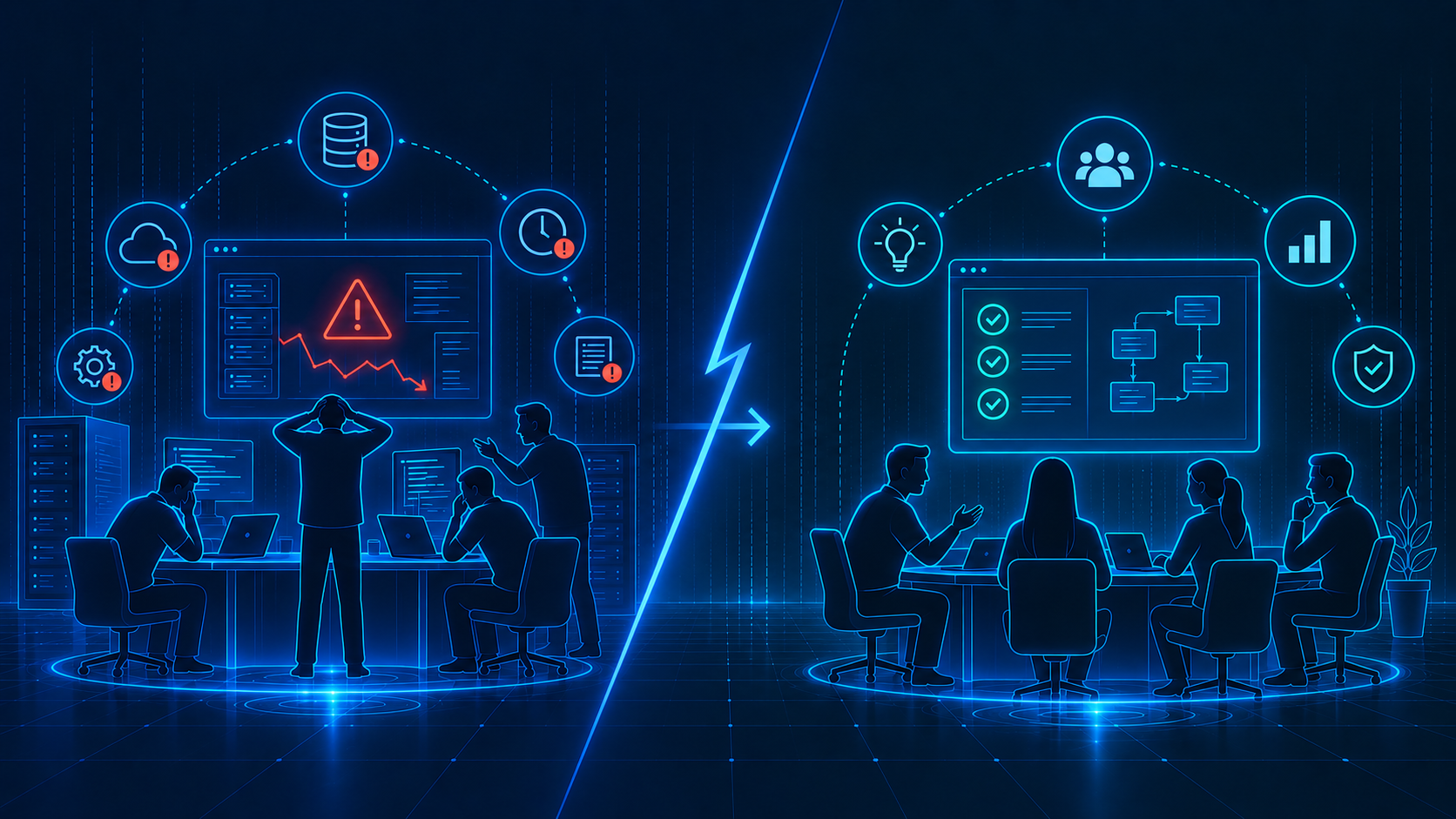
The Challenge
Vulnerability scans without operational clarity
Disconnected vulnerability scanning tools, inconsistent scan coverage, and unmanaged remediation workflows leave cybersecurity teams buried in alerts, blind spots, and unresolved security risks.
Alert fatigue overload
Automated vulnerability scanners generate thousands of low-context findings, making it difficult to prioritize vulnerabilities across critical systems.
Incomplete scan coverage
Legacy assets, cloud workloads, and web application environments often fall outside standard vulnerability scanning services and routine scans.
Delayed remediation cycles
Security teams identify vulnerabilities faster than operations teams can remediate vulnerabilities across fragmented infrastructure and tooling.
Compliance audit gaps
Inconsistent vulnerability scan reporting creates gaps in vulnerability and compliance tracking during audits, reviews, and security assessments.
Scanner configuration drift
Misaligned scanner policies and unmanaged vulnerability scanning settings create inconsistent visibility across environments and business units.
Hidden network exposures
Network vulnerabilities persist across unmanaged endpoints, third-party systems, and overlooked assets outside centralized cybersecurity workflows.
The Solution
Scalable vulnerability management without operational drag
Managed vulnerability scanning services create clearer security visibility, faster remediation alignment, and steadier cybersecurity execution across complex environments.
Unified scan visibility
Centralized vulnerability scan reporting reduces fragmented oversight across cloud security, web application environments, and operating systems.
Faster remediation alignment
Actionable vulnerability management workflows help teams address critical vulnerabilities without slowing releases or operational delivery cycles.
Consistent security posture
Managed vulnerability scanning improves cybersecurity consistency across distributed assets, external vulnerability exposure, and evolving security policies.
GET A FREE CONSULTATION
+65 60288048
Unresolved vulnerabilities quietly increase operational risk, remediation backlog, and pressure across critical systems. Secure your environment before instability slows execution further.
Core Capablities
Structured scanning built for operational control
Automated vulnerability scanning services are managed through standardized workflows, scheduled scan orchestration, and governed remediation processes across cloud, network, and web application environments.
Continuous scan orchestration
Vulnerability scanners run scheduled assessments across operating systems, endpoints, cloud assets, and external-facing infrastructure.

Policy-driven remediation
Managed vulnerability scanning workflows align remediation handling with security policies, escalation paths, and audit requirements.

Web application coverage
Web application vulnerability scanning includes authenticated testing, asset validation, and structured detection of security flaws.
Engagement Model
Guided scanning through each operational phase
The engagement moves through defined operational stages covering alignment, scan execution, remediation coordination, and transition planning.
Align
Scope security workflows
Teams review infrastructure, scanning services scope, and existing vulnerability management practices. Access and ownership are confirmed.
Activate
Deploy scanning operations
Vulnerability scanners are configured across cloud, network, and web application environments. Scan schedules and reporting workflows are established.
Stabilize
Coordinate remediation activity
Security operations teams review vulnerability scan findings, track remediation progress, and manage recurring cybersecurity assessments.
Transition
Transfer operational ownership
Runbooks, scan policies, and vulnerability scanning tools are handed over. Internal teams assume ongoing operational management.
Our Tech Stack
Trusted tools behind every vulnerability scan
Our automated vulnerability scanning services use proven cybersecurity platforms, cloud-based vulnerability scanners, and enterprise-grade testing tools built for secure, repeatable security operations.

OpenVAS

Qualys VMDR

Rapid7 InsightVM

Burp Suite

OWASP ZAP

Nessus
FAQs
Operational questions teams ask before rollout
This section covers common questions around vulnerability scanning services, onboarding, workflows, integrations, governance, and ongoing security operations.
How are vulnerability scans scheduled and managed?
Vulnerability scanning services are typically scheduled around infrastructure usage, deployment windows, and operational risk levels. Scans can run continuously, daily, weekly, or on-demand across cloud, network, and web application environments. Managed vulnerability scanning workflows include scanner configuration, asset grouping, reporting intervals, and escalation handling aligned with internal security operations processes.
Will the scans affect production systems or application performance?
Most automated vulnerability scanning tools are configured to minimize operational impact through throttling, scoped targeting, and controlled scan windows. Web application vulnerability scanning and external vulnerability assessments are tested against production-safe parameters before rollout. High-intensity testing, including penetration test activity, is separated from standard vulnerability scan operations.
How are vulnerabilities prioritized after detection?
Findings are categorized using severity scoring, exploitability, asset exposure, and operational context. Security professionals review vulnerability scan results to identify critical vulnerabilities, misconfigured cloud assets, and active security gaps requiring immediate remediation. Prioritization workflows are aligned with existing cybersecurity strategy, governance models, and remediation ownership structures.
Can vulnerability scanning integrate with our existing tools?
Yes. Vulnerability scanning tools commonly integrate with SIEM platforms, ticketing systems, CMDBs, DevOps workflows, and broader security services infrastructure. Scan data can also feed into vulnerability management platforms and security information workflows used by in-house security teams. Integration scope depends on infrastructure complexity, access policies, and existing security ecosystem requirements.
Who owns remediation activities during the engagement?
The service manages vulnerability detection, reporting workflows, and coordination processes, while remediation ownership typically remains with internal infrastructure, application, or operations teams. Managed services workflows define escalation paths, communication cadence, and validation procedures for addressing vulnerabilities. Ownership boundaries are documented during onboarding to avoid operational gaps.