DevSecOps services provider
DevSecOps services
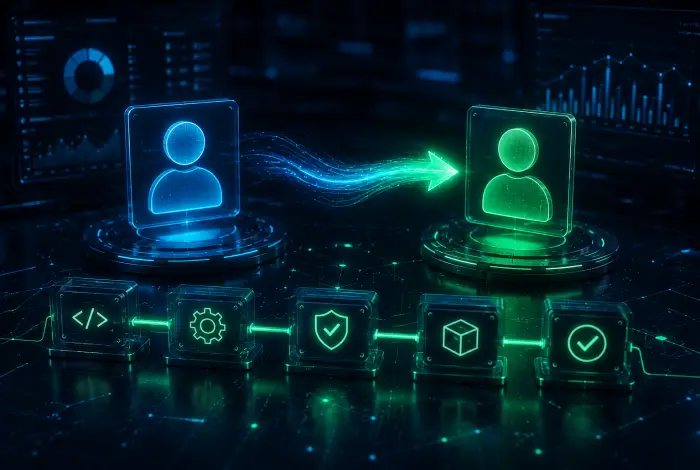
Stop security bottlenecks from slowing releases. Build faster, ship safer, and reduce operational risk with DevSecOps systems engineered for speed, stability, and continuous compliance.
The Challenge
DevSecOps breaks when speed outpaces security discipline
Disconnected DevOps workflows, inconsistent security testing, and fragmented automation create hidden vulnerability risks across the software development lifecycle and software delivery pipeline.
Delayed security reviews
Manual security checks slow deployment cycles and create approval bottlenecks across development and operations teams handling continuous integration workflows.
Fragmented toolchains
DevSecOps tools, security scanning platforms, and cloud infrastructure workflows operate in silos, leaving gaps across the development lifecycle.
Untracked vulnerabilities
Security flaws surface late in the software delivery lifecycle, forcing developers into reactive remediation under release pressure and audit scrutiny.
Compliance drift
Security policies, GDPR requirements, and compliance checks fall out of sync as software development and deployment workflows scale across teams.
Pipeline instability
Overloaded DevOps pipeline automation creates inconsistent deployment behavior, failed security testing, and unreliable software delivery processes.
Inconsistent security ownership
Development teams, DevOps engineers, and cybersecurity stakeholders apply different security practices, creating gaps in secure software accountability.
The Solution
Build secure software without slowing delivery
Move from fragmented DevOps workflows to a more reliable software delivery lifecycle with stronger operational control, consistent execution, and secure software practices embedded across development.
Faster release stability
Reduce deployment disruption and improve reliability across the DevOps process with structured DevSecOps practices and automated security workflows.
Clearer security oversight
Gain better visibility into security vulnerabilities, compliance exposure, and software lifecycle risks without slowing software development teams.
Scalable delivery control
Implement DevSecOps frameworks that support secure and compliant software delivery as infrastructure, teams, and deployment complexity expand.
GET A FREE CONSULTATION
+65 60288048
Operational gaps widen with every delayed release, driving instability, slower delivery, and mounting pressure across teams. Build secure execution now and scale with confidence.
Core Capablities
Structured for disciplined DevSecOps execution
DevSecOps services are delivered through governed workflows, integrated security practices, and standardized automation across software development, infrastructure, and deployment operations.
Pipeline security orchestration
DevOps and DevSecOps pipelines are configured with automated security testing, approval controls, and release governance across the development lifecycle.
Infrastructure configuration management
Infrastructure as code templates, access policies, and cloud configurations are maintained through version-controlled operational workflows.
Security testing integration
Software composition analysis, vulnerability scanning, and testing services are embedded into the software development process and delivery pipeline.
Engagement Model
Guided execution across the DevSecOps lifecycle
DevSecOps services progress through defined operational stages covering alignment, workflow integration, active delivery support, and structured transition planning.
Align
Assess delivery workflows
Teams review DevOps processes, security practices, and software delivery workflows. Priorities, ownership, and engagement scope are defined.
Activate
Embed operational controls
DevSecOps tools, SAST workflows, and security testing processes are integrated into the development lifecycle and deployment pipeline.
Stabilize
Govern release operations
Security issues, pipeline activity, and deployment workflows are monitored through managed service routines and operational reviews.
Transition
Transfer workflow ownership
Runbooks, security practices, and DevSecOps documentation are handed to internal teams through structured transition sessions.
Our Tech Stack
Trusted platforms for secure DevSecOps operations
Our DevSecOps services use proven security tools, CI/CD platforms, cloud infrastructure, and automation frameworks trusted across enterprise software development and secure software delivery environments.

SonarQube

Snyk

HashiCorp Vault

Aqua Security

Prisma Cloud

OWASP ZAP
FAQs
Operational questions around DevSecOps delivery
This section covers common questions about DevSecOps services, including onboarding, workflows, governance, tooling integration, and operational delivery models.
How are DevSecOps services integrated into existing workflows?
DevSecOps services are typically embedded into current DevOps and software development processes rather than replacing them. Existing CI/CD pipelines, deployment workflows, and security practices are reviewed first, then updated through staged integration. This approach helps align automation, security testing, and operational controls without disrupting active software delivery schedules.
Can DevSecOps work with our current tools and infrastructure?
Yes. Most DevSecOps consulting services are designed around existing environments, including tools like Jenkins, GitLab, Kubernetes, Terraform, and major cloud platforms. Integrating security tools usually involves configuring workflows, access policies, pipeline controls, and security testing processes around the current development lifecycle and infrastructure model.
Who manages security ownership during the engagement?
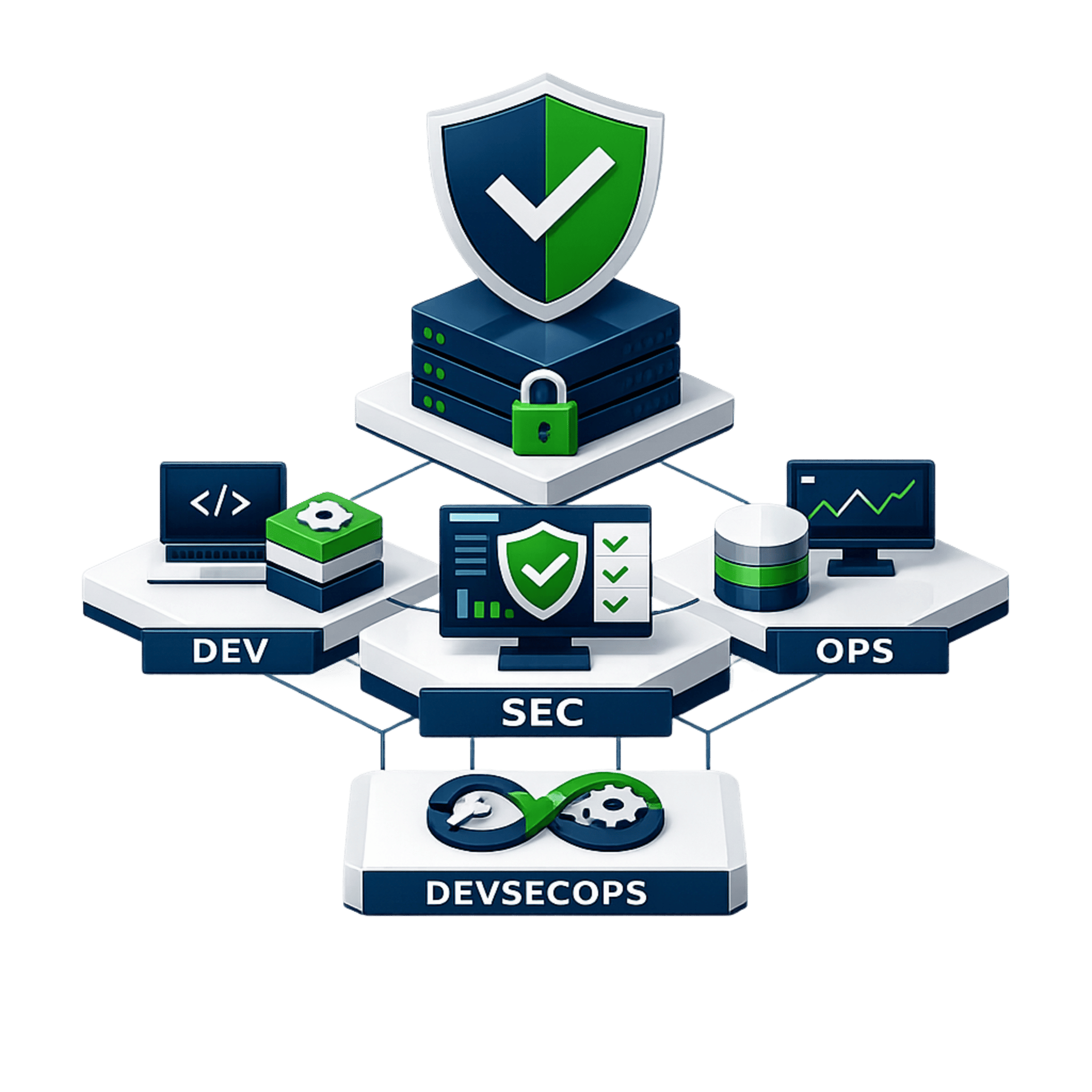
Security ownership is typically shared between internal teams and the DevSecOps provider. Development teams continue managing application delivery, while operational governance, security practices, workflow coordination, and policy management are handled collaboratively. Roles, escalation paths, and approval responsibilities are usually defined during onboarding.
How is vulnerability management handled in practice?
Vulnerability workflows are integrated into the software delivery lifecycle through automated scans, SAST processes, dependency analysis, and operational review routines. Security issues are categorized based on severity, exploitability, and deployment exposure. Review cycles are usually aligned with release schedules, change windows, and compliance requirements.
Can DevSecOps services support multi-cloud environments?
Yes. DevSecOps capabilities often extend across AWS, Azure, Google Cloud, hybrid infrastructure, and kubernetes environments. Operational workflows are configured around shared governance models, infrastructure controls, and standardized security practices to maintain consistency across distributed systems and deployment pipelines.